
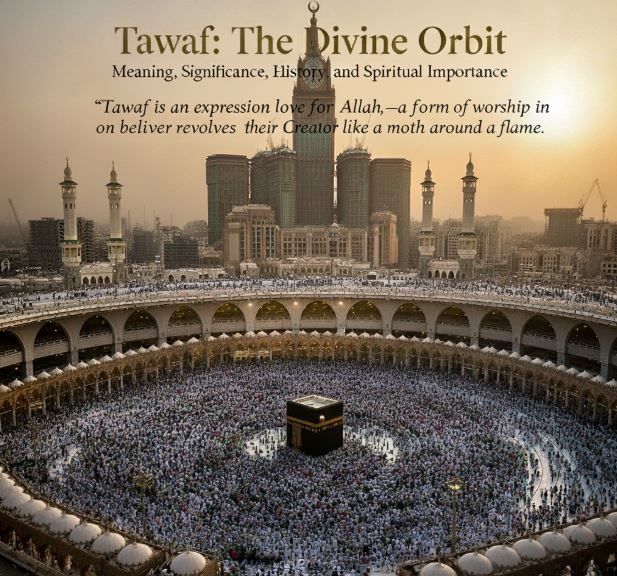
Tawaf is one of the most meaningful acts of worship in Islam. It is performed by Muslims during Hajj and Umrah in the holy city of Makkah. While many believers plan their journey through umrah packages, Tawaf remains the spiritual heart of the pilgrimage experience. This sacred act brings Muslims closer to Allah and strengthens faith through devotion, patience, and unity.
Tawaf involves walking around the Kaaba in a specific manner. It is simple in action but deep in meaning. Muslims from all backgrounds perform Tawaf with the same purpose and intention. This act reflects obedience, humility, and love for Allah.
What Is Tawaf in Islam?
Tawaf means circling the Kaaba seven times in a counterclockwise direction. It is permitted as an act of worship to Allah alone. Every round begins and ends at the BlackStone, known as Hajj-e-Aswad.
After understanding its definition, it is important to know why Tawaf holds such a central place in Islam. Tawaf represents a believer’s complete focus on Allah. Just as angels circle Allah’s throne, Muslims circle the Kaaba in submission and remembrance. It is a physical expression of spiritual devotion.
Historical Background of Tawaf
Tawaf has its roots in the time of Prophet Ibrahim (AS). He and his son Prophet Ismail (AS) built the Kaaba by Allah’s command. From that time, Tawaf became a core act of worship.
Over centuries, Tawaf continued through different eras of Islamic history. Although customs changed, the essence of Tawaf remained the same. Prophet Muhammad (PBUH) restored Tawaf to pure monotheism by removing idols from the Kaaba. Today, Muslims from the USA and across the world follow the same Sunnah with respect and love.
Spiritual Significance of Tawaf
Tawaf strengthens the spiritual bond between a believer and Allah. It reminds Muslims that Allah is the center of life. Every step taken during Tawaf is filled with prayers, remembrance, and reflection.
Moreover, Tawaf teaches humility and patience. The crowd, heat, and physical effort test one’s character. However, these challenges also purify the heart. Many pilgrims feel peace and emotional healing while performing Tawaf. This spiritual connection makes Tawaf unforgettable for every belief.
Types of Tawaf in Islam
There are different types of Tawaf, each with its own purpose and timing. Understanding these helps pilgrims perform rituals correctly.
Before listing them, it is important to note that all types of Tawaf share the same method but differ in intention and obligation.
- Tawaf al-Qudum is performed when entering Makkah.
- Tawaf al-Ifada is a compulsory Tawaf during Hajj.
- Tawaf al-Wada is the farewell Tawaf before leaving Makkah.
- Tawaf al-Umrah is performed during Umrah.
Each type holdspiritual value and fulfills a specific religious duty.
How Tawaf Is Performed Step by Step
Tawaf is performed with purity, intention, and respect. Pilgrims must be in a state of wudu before starting. The intention is made silently for Allah.
After making the intention, pilgrims begin circling the Kaaba seven times. Men often uncover their right shoulder during certain Tawaf types. Supplications can be recited in any language. This flexibility allows Muslims, including those visiting from the USA, to connect deeply without language barriers.
Tawaf During Umrah and Hajj
Tawaf plays a vital role in both Umrah and Hajj. Without Tawaf, these pilgrimages remain incomplete. Pilgrims often prepare spiritually before traveling through Umrah packages that include guidance from experienced Umrah guides for Tawaf.
During peak seasons, Tawaf requires patience and awareness. Despite the crowds, pilgrims remain focused on worship. This shared experience builds unity among Muslims worldwide. Whether someone travels alone or in groups, Tawaf becomes a moment of personal reflection and collective devotion.
Common Mistakes to Avoid During Tawaf
Many pilgrims make small mistakes due to a lack of knowledge. Learning about them improves the quality of worship.
Before mentioning them, remember that Allah rewards sincere effort. Minor errors do not cancel Tawaf, but awareness helps maintain Sunnah.
- Pushing or harming others unnecessarily.
- Believing specific duas are compulsory.
- Losing count of rounds without correction.
- Touching the Kaaba exceptionally
Avoiding these mistakes ensures a calm and respectful Tawaf experience.
Importance of Tawaf for Modern Muslims
In today’s fast-paced world, Tawaf offers a rare moment of peace. It disconnects believers from distractions and reconnects them with faith. Muslims living busy lives, especially in countries like the USA, find Tawaf deeply grounding.
Tawaf also reminds Muslims of equality. Everyone dresses simply and worships the same way. There is no status or difference. This powerful message of unity makes Tawaf relevant for every generation.
Conclusion
Tawaf is more than a ritual; it is a spiritual journey of the heart. It connects Muslims to their history, faith, and Creator. Through Tawaf, believers learn patience, humility, and devotion. Whether performed during Umrah or Hajj, Tawaf leaves a lasting spiritual impact. For every Muslim, it remains a beautiful reminder that Allah is always at the center of life.